
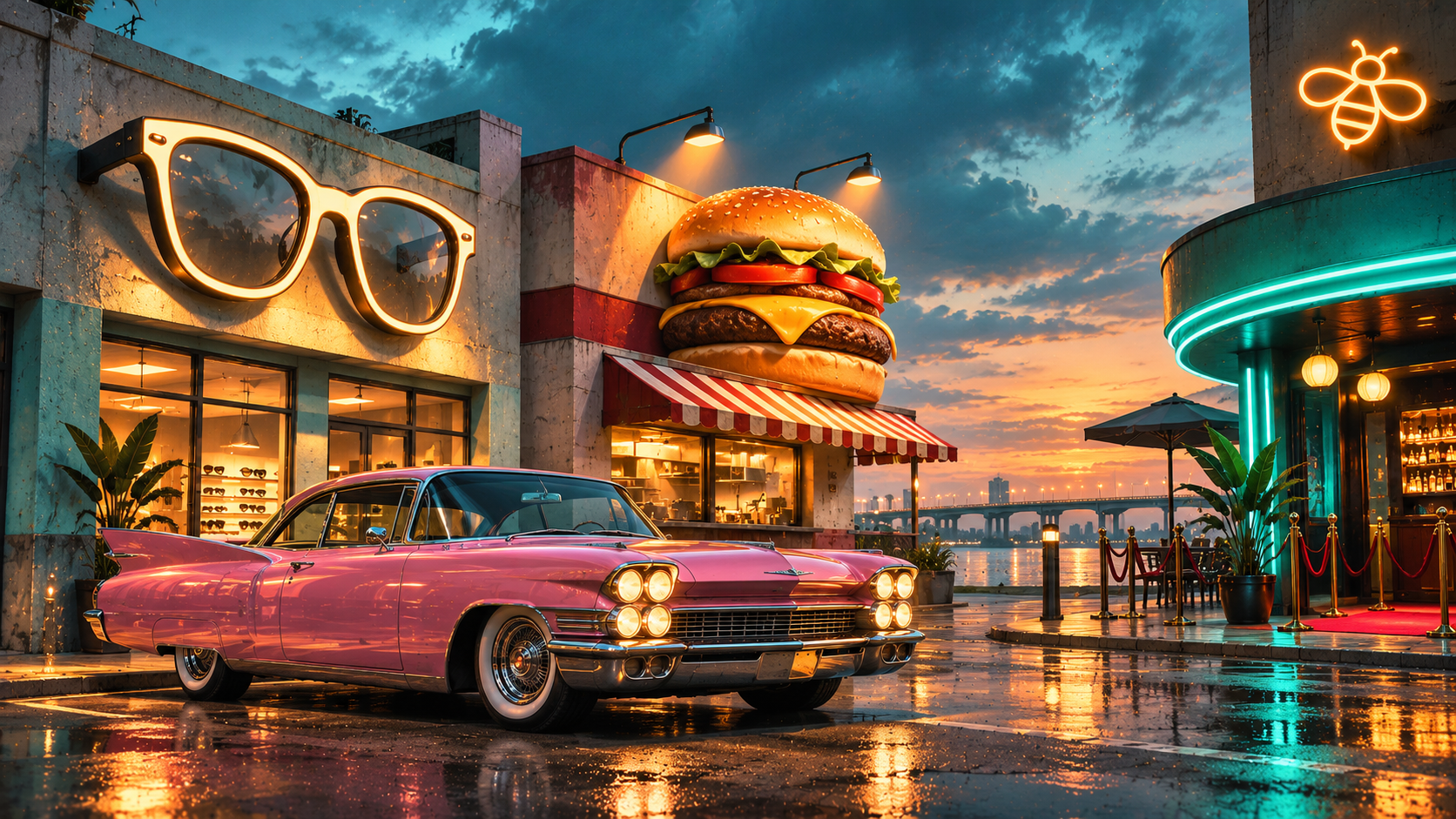
When Grand Theft Auto VI (GTA 6) launched on 19 November 2026, it wasn’t just a major event for gamers. It became a marketing opportunity for brands around the world.
From Specsavers announcing an unexpected GTA partnership to Burger King recreating a fictional burger, businesses found creative ways to participate in the excitement surrounding Rockstar Games’ latest release.
Some campaigns were elaborate, involving custom vehicles, events and special products. Others relied on a clever idea, a well-timed social media post or a joke that audiences immediately understood.
What makes these GTA 6 marketing campaigns particularly interesting is that many of the brands involved weren’t official Rockstar partners.
They found ways to connect their own products and personalities to a cultural moment that millions of people were already discussing.
This approach is often described as reactive marketing or moment marketing: creating timely campaigns around events, trends or conversations that are relevant to your audience.
But participating in a popular conversation doesn’t automatically make a campaign successful. The best examples give people a reason to remember the brand, not just the trend.
In this article, we’ll explore six standout marketing campaigns inspired by GTA 6, examine what makes each one interesting and explain how other businesses can apply similar thinking to their own marketing strategies.
Why did so many brands create GTA 6 marketing campaigns?
Few product launches generate the level of attention that surrounded GTA 6.
The franchise had already built a huge global audience, and anticipation grew through trailers, announcements, social media discussions and years of speculation.
According to Meltwater’s analysis, GTA 6 generated more than 10.5 million social media mentions and 3.13 billion engagement actions between 1 May and 19 November 2026.
This created an unusual opportunity for brands.
Rather than trying to build an entirely new conversation, they could participate in one that was already attracting enormous attention.
A food business could reach gamers preparing for launch night. A retailer could create a themed promotion. A brand known for humour could produce a playful reference to the game.
But there was a challenge.
With so many companies attempting to join the same conversation, a generic social media post wasn’t necessarily enough to stand out.
The most interesting campaigns connected GTA 6 to something distinctive about the business itself.
Let’s look at how different brands approached that challenge.
1. Specsavers: The GTA partnership nobody expected
Of all the brands responding to the GTA 6 launch, Specsavers produced one of the most memorable examples of reactive marketing.
Ahead of the game’s release, the optician announced what it described as its biggest partnership of all time.
The announcement referenced GTA, naturally leading audiences to assume that Specsavers had secured a partnership with Grand Theft Auto.
But the reveal was rather different.
Specsavers wasn’t partnering with Rockstar Games.
Instead, it announced a sponsorship agreement with GTA Transport Ltd, a road haulage company based in Leicester.
The partnership included free eye tests for the company’s drivers.
What initially looked like an unexpected gaming collaboration turned into a joke that fitted perfectly with Specsavers’ longstanding brand identity.
Why the Specsavers campaign worked creatively
Specsavers has spent more than two decades building recognition around its well-known advertising slogan, “Should’ve gone to Specsavers”.
Its campaigns regularly feature mistakes, misunderstandings and people who apparently failed to notice something obvious.
The GTA partnership followed exactly the same approach.
The audience was encouraged to believe Specsavers had made a major commercial announcement, only to discover that the brand had apparently confused a video game franchise with a transport business.
The punchline was instantly recognisable.
But importantly, there was a real partnership behind it.
The campaign wasn’t simply a joke posted on social media. Specsavers actually offered something relevant to its business: eye tests for people who spend their working days driving.
What businesses can learn
The most useful aspect of this campaign isn’t the wordplay.
It’s that Specsavers found a way to participate in a major cultural moment without abandoning its established brand personality.
A smaller business could apply the same principle by identifying an unexpected but authentic connection between its products and a popular event.
For example, a local garage might create a humorous campaign around a major motoring event.
A stationery company could respond creatively to the launch of a popular film or television series if there’s a natural connection to its products.
The opportunity is to create a campaign that people remember for both the cultural reference and the business behind it.
Marketing lesson: The strongest reactive campaigns don’t just reference something popular. They connect that moment to what makes the brand recognisable.
View the campaign: Specsavers’ original Instagram post or read the campaign coverage and creative explanation.
2. Burger King: Turning a fictional GTA burger into a real product
While Specsavers used humour, Burger King Belgium took a more product-focused approach.
Grand Theft Auto has a long history of fictional brands that parody real-world businesses.
One of those is Burger Shot, a fictional fast-food restaurant with exaggerated menu items.
For the GTA 6 launch, Burger King Belgium decided to reverse the joke.
Working with agency Happiness Brussels, it created the HeartWhopper, a real-life version of an oversized burger associated with the franchise.
The product included seven flame-grilled beef patties, alongside familiar burger ingredients.
But Burger King didn’t simply add it to the regular menu.
Instead, the HeartWhopper became the centre of a limited social media competition.
How the campaign encouraged participation
Fans were invited to share creative gameplay clips involving a burger from the game’s fictional restaurant and tag Burger King Belgium or Luxembourg.
Each day, a selected participant could win a real HeartWhopper.
The competition was designed to run for two weeks.
Burger King also supported the activation through YouTube advertising, YouTube Shorts and gaming communities on Reddit.
This made the campaign more than a one-off social media joke.
It combined a distinctive product, audience participation and distribution across channels where gamers were already spending time.
Why this approach is interesting
One of the most valuable elements is that Burger King gave audiences something to do.
Many reactive campaigns ask people to look at a piece of content, perhaps like it and then move on.
Burger King encouraged participants to create content connected to both the game and the brand.
The product itself also provided a strong visual opportunity.
A seven-patty burger is unusual enough to attract attention even from people who aren’t familiar with the game.
That helped make the idea understandable beyond its original gaming audience.
What businesses can learn
Consider how your business could turn a popular theme into a tangible experience.
An independent bakery could create a limited-edition product connected to a relevant local celebration.
A retailer might develop a themed bundle around a major cultural event.
A service business could offer a limited workshop or special experience.
The important point is that the promotion should make sense for your product and target audience.
You don’t need to reproduce an existing fictional brand or copyrighted design. The useful principle is to create something original that gives people a reason to participate.
Marketing lesson: Turn cultural attention into an experience or product that customers can interact with.
View the campaign: Burger King’s HeartWhopper campaign, including the launch creative and teaser posts, or see the brand’s Instagram announcement.
3. KFC UK: Bringing a gaming experience into the real world
KFC UK and Ireland took another creative approach to the GTA 6 launch.
Rather than simply posting about the game, the brand created a limited-time delivery experience inspired by Grand Theft Auto’s fictional chicken restaurant, Cluckin’ Bell.
The promotion, named Cluck n’ Bell, involved a bright pink 1959 Cadillac delivering KFC meals to selected customers in London.
The vehicle was designed to reflect the colourful atmosphere associated with the game.
The promotion was announced on 17 November, with deliveries scheduled for the game’s launch day on 19 November.
Customers could enter a competition for the special delivery experience, while a wider delivery promotion was also planned through Just Eat.
The campaign was not an official Rockstar Games collaboration.
Why the concept made sense for KFC
KFC identified a simple insight about its audience.
People who had waited years for GTA 6 were likely to spend considerable time playing when the game finally arrived.
Some might not want to interrupt their gaming sessions to prepare food or leave the house.
Food delivery was therefore a natural connection.
The unusual Cadillac added the entertainment value that made the campaign interesting enough to discuss and share.
The importance of a clear customer insight
The creative execution was memorable, but the underlying idea was straightforward.
KFC understood what its target customers might be doing on launch day and designed a promotion around that behaviour.
This is something smaller businesses can apply.
For example, a local takeaway could promote convenient meals during a major sporting event.
A café near a conference venue could create a breakfast offer for attendees.
A retailer could promote relevant products before a seasonal activity.
The opportunity comes from understanding the customer’s situation rather than attaching a popular name to an unrelated offer.
Marketing lesson: Connect your campaign to what your customers are actually doing during a cultural event.
View the campaign: KFC’s Cluck n’ Bell launch promotion and Cadillac creative.
4. KFC Australia: Using humour to create a shareable event
KFC’s Australian team developed a very different campaign for the same launch.
While the UK campaign focused on food delivery, the Australian activation focused on something many gamers were joking about: taking time off work to play GTA 6.
KFC organised a fictional funeral for a character named Ann Alibi.
The event was held at KFC Robina on Queensland’s Gold Coast on launch day.
The idea was that fans could attend the funeral and receive a certificate of attendance, creating a humorous excuse for being away from work.
The activation featured a staged funeral setting and a comedian delivering a eulogy.
It was deliberately absurd, designed to play into the conversations already happening around people rearranging their schedules for the game.
Why the campaign attracted attention
The idea was easy to understand.
The launch was such an important event for fans that some were joking about needing excuses to miss work.
KFC turned that joke into a real-world event.
It also gave people material to share online: photographs, videos and a story that didn’t require a lengthy explanation.
What businesses can learn
Humour can be an effective way to connect with a particular audience, especially when it reflects a conversation they are already having.
But comedy works best when it fits the brand’s identity and the expectations of its customers.
A more traditional business might not benefit from an elaborate stunt.
A smaller company could instead use a playful social media post, a themed event or a light-hearted promotion relevant to a current conversation.
Before launching a humorous campaign, consider whether it will be understandable outside your immediate audience and whether it could be misinterpreted.
Marketing lesson: You don’t always need a complicated message. One memorable idea, executed at the right time, can become the story people share.
View the campaign: KFC Australia’s Ann Alibi stunt, alongside other GTA 6 reactive campaigns.
5. Heineken: Turning a virtual destination into a real-world experience
Not every GTA 6 campaign focused on the game’s characters or products.
Heineken used the setting itself as the inspiration for a location-based marketing campaign.
GTA 6 takes place in the fictional state of Leonida, including Vice City, which draws heavily on Miami.
Heineken used that connection to invite people to experience the real city.
Working with agency LePub New York, the brand created outdoor digital advertising near Miami venues that had inspired locations in the game.
The campaign encouraged gamers to step away from their screens and enjoy real-world social experiences.
On launch night, it also invited people to selected Miami venues for a bar-crawl-style activation.
Why the location mattered
A generic advertisement about GTA 6 could have appeared almost anywhere.
Heineken’s campaign was more relevant because it appeared in places connected to the game’s setting.
The location became part of the creative idea.
It also created a contrast between the fictional experience and the real-world destination.
What businesses can learn
Location can be a powerful part of reactive marketing.
A local business doesn’t need to compete nationally to benefit from a major event.
Instead, it can identify opportunities relevant to its immediate area.
For example, a restaurant near a concert venue could create a pre-show dining experience.
A hotel could promote weekend packages around a local festival.
A shop in a tourist destination could collaborate with neighbouring attractions.
The strongest location-based campaigns give people a reason to visit the business, not just notice its advertising.
Marketing lesson: Use the connection between a cultural moment and your physical location to create a relevant customer experience.
View the campaign: Heineken’s Miami GTA 6-inspired outdoor advertising and bar-crawl activation.
6. Clutch: Bringing GTA’s cars into Toronto
Canadian online automotive retailer Clutch also found a distinctive angle.
The campaign played on two different meanings of GTA.
For gamers, GTA refers to Grand Theft Auto.
For people in Toronto, GTA is also commonly used to refer to the Greater Toronto Area.
Clutch combined those associations in a campaign that brought gaming-inspired vehicles into the real world.
On launch day, the business used GTA-style vehicle references on a dedicated website page and displayed wrapped versions of sports cars around Toronto.
The idea connected the retailer’s existing product category, cars, with a cultural moment dominated by a game known for vehicles and driving.
Why the connection was relevant
Unlike a generic brand simply publishing GTA-inspired artwork, Clutch had an immediate connection to the topic.
It sells cars.
The game’s identity is closely associated with cars.
And its market shares the GTA abbreviation.
Those connections gave the campaign several layers of relevance.
What businesses can learn
Look for genuine overlaps between your product, your audience and the cultural moment you’re considering.
A business doesn’t need to force a connection to every popular trend.
Sometimes the most effective decision is to ignore an event because it doesn’t fit.
But when there is a genuine link, a creative campaign can help customers see a familiar product in a different way.
Marketing lesson: The best reactive marketing opportunities often come from connections that are already present in your business.
View the campaign: Clutch’s GTA-themed activation, featured in this launch-week campaign collection.
What do these six GTA 6 marketing campaigns have in common?
Although the campaigns used different creative approaches, several principles appear repeatedly.
They started with the brand, not just the trend
Specsavers used its reputation for humour.
Burger King created a product connected to its own category.
KFC built its ideas around food and gaming occasions.
Heineken connected virtual experiences to real-world hospitality.
Clutch used its automotive business and local identity.
Each brand found a reason to participate that extended beyond the popularity of GTA 6.
This is important because reacting to every trend can make a company’s marketing feel inconsistent.
A good reactive campaign should still help customers remember what the business does.
They encouraged participation
Several campaigns gave audiences something to do.
Burger King encouraged gameplay submissions.
KFC offered competitions and real-world experiences.
Heineken organised an event.
Participation can generate more meaningful engagement than passive exposure alone.
That doesn’t mean every campaign needs a competition.
A useful resource, customer challenge, interactive experience or community event can create opportunities for participation.
They were timed around a major moment
Timing played a significant role.
The campaigns appeared immediately before or around the GTA 6 release.
That made them more relevant to existing conversations.
But timing alone isn’t enough.
A campaign launched at the perfect moment can still fail if the idea is weak or the audience isn’t interested.
They offered something distinctive
The most memorable activations didn’t rely exclusively on conventional GTA imagery.
They created a story.
A haulage company unexpectedly became the focus of a sponsorship announcement.
A fictional burger became a real product.
A mock funeral turned a gaming joke into a physical event.
These ideas provided something for journalists, creators and consumers to discuss.
How can smaller businesses use reactive marketing?
You don’t need a global advertising budget to apply the lessons from these campaigns.
The first step is to find cultural moments that are relevant to your audience.
That could be a major game launch, sporting competition, television programme, local festival or industry announcement.
But rather than immediately creating a social media post, consider how the event connects to your business.
Step 1: Identify an event your customers care about
Start with your audience.
What do they watch, attend, discuss or look forward to?
A local business might focus on regional events.
An ecommerce brand might identify trends within its product category.
A B2B company could respond to important changes affecting its industry.
The event should matter to the people you want to reach.
Step 2: Find a credible connection to your business
Ask what your company could contribute to the conversation.
Can you create a useful resource?
Offer a relevant experience?
Share an interesting observation?
Develop a limited promotion?
A strong connection helps the campaign feel natural rather than opportunistic.
Step 3: Choose the right format
Not every idea needs a professionally produced video or elaborate event.
You might create a social media post, short video, landing page, local partnership or email campaign.
Choose the format that makes the idea easiest to understand and share.
Step 4: Make the campaign easy to discover
Consider where your audience is most likely to encounter the content.
For some businesses, Instagram or TikTok may be appropriate.
Others might benefit from LinkedIn, local press, newsletters or community organisations.
If the campaign includes a commercial offer, make sure customers can easily find the relevant product or booking page.
Step 5: Measure business results, not just engagement
A successful social media post might generate considerable attention without creating any meaningful commercial value.
Track results against the objective of the campaign.
If the goal is brand awareness, review relevant reach, branded search interest and audience engagement.
If the goal is sales, measure purchases, conversion rates and advertising costs.
If the campaign involves an event, look at registrations, attendance and any relevant follow-up activity.
Don’t confuse media coverage with proven revenue.
The case studies above demonstrate creative approaches, but public coverage alone doesn’t establish how profitable each campaign was.
Could reactive marketing damage your brand?
Reactive marketing creates opportunities, but it also carries risks.
A campaign can attract attention for the wrong reasons if it misunderstands the audience, appears insensitive or uses intellectual property without appropriate permission.
The GTA 6 launch provides an especially relevant example because many brands used imagery, references and creative styles associated with Rockstar’s games.
Be careful with copyright and trademarks
Participating in a cultural conversation doesn’t automatically give a business permission to reproduce another company’s creative assets.
Using a game title in editorial commentary is different from creating an advertisement that appears to be officially associated with the game.
Copying characters, artwork, logos or other protected material can create legal risks.
Parody and humour don’t automatically remove those risks.
For most smaller businesses, the safer approach is to create original creative work, make any unofficial relationship clear and obtain permission when using protected assets commercially.
Avoid forcing unrelated trends into your marketing
Audiences can recognise when a brand is attempting to participate in a conversation without adding anything relevant.
A generic meme might generate a few likes, but it may not help anyone remember your business.
If you can’t identify a genuine connection between the trend and your product, it may be better to focus on other marketing opportunities.
Don’t mistake viral reach for success
A campaign receiving thousands of shares isn’t automatically generating customers.
The attention may come from people outside your target market.
It may be temporary.
Or it may generate little interest in the product itself.
Define the objective before creating the campaign, then review whether the results justify the investment.
Frequently asked questions about GTA 6 marketing campaigns
What brands used GTA 6 in their marketing?
Brands including Specsavers, Burger King Belgium, KFC, Heineken and Clutch created campaigns around the GTA 6 launch. These included social media stunts, limited products, competitions, events and location-based promotions.
Did Specsavers partner with Rockstar Games?
No. Specsavers created a playful campaign around the GTA name, but its actual partnership was with GTA Transport Ltd, a Leicester-based haulage business. The campaign included free eye tests for the company’s drivers.
What was Burger King’s GTA 6 campaign?
Burger King Belgium introduced the HeartWhopper, a seven-patty burger inspired by an exaggerated fictional burger from the Grand Theft Auto series. Fans could win the product through a social media competition involving gameplay clips.
Was KFC’s GTA 6 campaign an official collaboration?
KFC’s GTA-inspired Cluck n’ Bell campaign was an unofficial promotion, rather than an authorised collaboration with Rockstar Games. The UK activation featured a pink Cadillac delivering meals to selected competition winners.
What is reactive marketing?
Reactive marketing involves responding to current events, popular culture or industry developments with timely marketing content or campaigns. Effective reactive marketing connects the event to the brand’s identity and audience rather than simply referencing a popular trend.
Can small businesses use reactive marketing?
Yes. Small businesses can develop relevant campaigns around local events, major cultural moments and industry news. A creative idea, useful customer experience or timely partnership can be more achievable than an expensive national advertising campaign.
Does reactive marketing improve SEO?
Reactive marketing can create opportunities for search visibility, media coverage and backlinks, but SEO benefits aren’t guaranteed. Campaigns need relevant content, discoverable pages and genuine audience interest to generate lasting organic search value.
Final thoughts: What GTA 6 teaches us about reactive marketing
The GTA 6 launch showed how a major cultural event can create opportunities far beyond the company responsible for it.
Specsavers turned a clever misunderstanding into a partnership announcement.
Burger King created a product that brought a fictional experience into the real world.
KFC used humour and customer insight to develop memorable launch-day promotions.
Heineken and Clutch found ways to connect the game’s themes to real locations and products.
These campaigns were different, but they shared one important quality: they gave audiences a reason to associate the excitement around GTA 6 with the brand behind the campaign.
For businesses considering reactive marketing, that’s the lesson worth remembering.
You don’t need to copy the creative style of a popular game, film or event.
You need to understand why your audience cares about it and find a credible way to contribute something of your own.
Because the best reactive marketing doesn’t just make people notice the trend.
It makes them remember your business.
For more analysis, explore our original guide to GTA 6’s marketing strategy and our article on how Rockstar Games built its long-term brand reputation.